
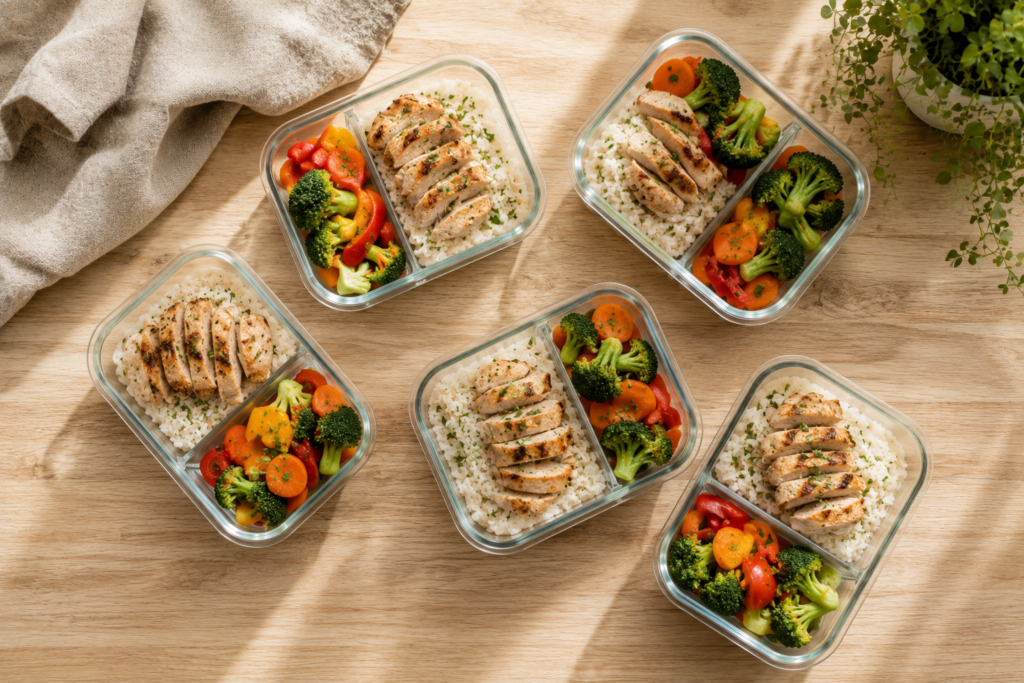
Grocery bills keep climbing, and takeout has quietly become the default answer to “what’s for dinner” in millions of households. The single most effective habit for reversing both problems isn’t a diet or an app — it’s learning how to meal prep on a budget. Done right, meal prep on a budget can cut a household’s food spending by 30–40% while actually saving time during the busiest part of the week.
This guide walks through the entire process from zero: why it works, exactly what tools you need, a full 7-day sample plan, the most common mistakes that make people quit after one week, and how to keep it going long-term. If you’ve already read the budget dinner ideas that taste like takeout guide or picked up the essential budget kitchen tools, this is where those two pieces come together into a repeatable weekly system.
Why Meal Prep on a Budget Actually Works
Meal prepping saves money for three specific reasons, not just “cooking more”:
- Bulk buying reduces per-unit cost. Buying a 5-pound bag of rice or a family pack of chicken thighs costs significantly less per serving than buying small quantities repeatedly throughout the week.
- Batch cooking reduces energy and time waste. Cooking one large pot of rice or beans uses roughly the same energy and time as cooking a small portion — but yields five to seven servings instead of one.
- Planning prevents impulse takeout orders. The single biggest budget leak in most households isn’t grocery overspending — it’s ordering delivery on nights when nothing is planned. Having food already prepared removes that decision point entirely.
What You Need Before You Start
You don’t need special equipment beyond a well-stocked basic kitchen. If you haven’t already, the budget kitchen tools guide covers everything required — specifically a large skillet, a medium saucepan, a large mixing bowl, and reusable storage containers, which are the four tools you’ll use constantly in the plan below.
Beyond tools, you need:
- One planning session (15–20 minutes, ideally the same day each week)
- One shopping trip (bulk-focused, from a list — not multiple small trips)
- One prep session (60–90 minutes, usually on a weekend day)
Step-by-Step: How to Meal Prep on a Budget
Step 1: Choose 3–4 Base Proteins and Grains for the Week
Rather than planning seven completely different meals, budget meal prep works by choosing a small number of proteins and grains, then varying the seasoning, sauce, and vegetables around them. For example: chicken thighs, canned beans, rice, and pasta can be combined into at least seven distinct-tasting meals using different sauces and spices.
Step 2: Build Your Shopping List Around What’s on Sale
Check your grocery store’s weekly sale flyer before finalizing your protein choice. Building the week’s plan around whichever protein is discounted that week is one of the single biggest budget levers in meal prepping — often saving 20–30% compared to buying at full price.
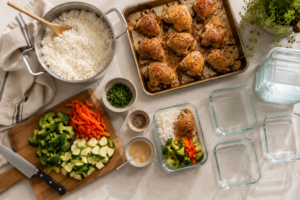
Step 3: Batch-Cook Your Base Ingredients in One Session
On your designated prep day:
- Cook a large pot of rice or another grain (enough for the full week)
- Cook your chosen protein in bulk (roast, bake, or pan-sear all of it at once)
- Wash and chop any raw vegetables you’ll use throughout the week
- Portion everything into containers, keeping proteins, grains, and vegetables separate so they can be recombined differently each day
Step 4: Store Properly to Avoid Food Waste
- Cooked grains and proteins last 4–5 days refrigerated
- Freeze anything you won’t eat within 4 days — this alone prevents a huge share of at-home food waste
- Store sauces separately from proteins/grains to avoid soggy, unappetizing reheated meals
Step 5: Assemble Meals Daily, Not All at Once
Rather than fully plating seven identical meals on Sunday (which often leads to “meal prep fatigue” by Wednesday), keep components separate and combine them fresh each day with a different sauce or seasoning. This single change is the biggest reason people successfully stick with meal prepping past the first two weeks.
A Full 7-Day Budget Meal Prep Plan
This sample plan uses the same batch-cooked chicken, rice, and beans in different combinations all week, so shopping and cooking stay simple while meals still feel different each day.
| Day | Meal | Built From |
|---|---|---|
| Monday | Teriyaki chicken and rice | Batch chicken + rice + quick teriyaki sauce |
| Tuesday | Chicken burrito bowl | Batch chicken + rice + beans + salsa |
| Wednesday | Fried rice | Rice + eggs + frozen vegetables |
| Thursday | Chicken and bean soup | Batch chicken + beans + canned tomatoes |
| Friday | BBQ chicken with rice | Batch chicken + BBQ sauce + rice |
| Saturday | Bean and rice stuffed peppers | Rice + beans + bell peppers |
| Sunday | Leftovers/flex day | Whatever remains, combined freely |
This structure mirrors the same technique used across the budget dinner ideas guide — a small number of staple ingredients, rotated through different sauces and formats, rather than seven completely separate recipes.
Common Meal Prep Mistakes That Waste Money (and How to Avoid Them)
Mistake 1: Prepping Meals You Don’t Actually Enjoy
Many beginners prep the “correct” healthy meal rather than one they genuinely want to eat, then abandon it by Wednesday and order takeout anyway — which erases any savings. Choose meals you already like, just built more efficiently.
Mistake 2: Buying Specialty Ingredients for a Single Recipe
If an ingredient is only used once all week, it’s rarely worth the cost. Stick to versatile staples that appear across multiple meals.
Mistake 3: Not Portioning Immediately After Cooking
Leaving a large pot of food in the fridge without portioning it leads to overeating and unclear serving sizes, both of which quietly increase costs. Portion into containers right after cooking, while it’s still fresh.
Mistake 4: Ignoring the Freezer
Fresh vegetables and proteins spoil quickly if the week’s plan changes. Frozen vegetables and proteins are just as nutritious and prevent the single biggest source of at-home food waste: forgotten fresh produce.
Mistake 5: Overcomplicating the First Few Weeks
Trying to prep five entirely different, complex recipes in the first week is the most common reason people quit meal prepping altogether. Start with the simple 7-day plan above, and only add variety once the habit feels automatic.
For more on how food waste affects household budgets, see the USDA’s food loss and waste research.
How Much You Can Realistically Save
Based on the cost estimates from the budget dinner ideas guide (roughly $1–$3 per serving when cooked at home), a household of two eating seven home-cooked lunches and dinners instead of a mix of takeout and inconsistent grocery shopping can realistically save $150–$250 per month, largely by eliminating impulse takeout orders and reducing bulk-buying waste.
Frequently Asked Questions
How long does meal-prepped food actually stay fresh? Most cooked proteins, grains, and beans stay fresh in the refrigerator for 4–5 days. Anything you won’t eat within that window should be frozen immediately after cooking rather than left in the fridge.
Do I need a lot of containers to start meal prepping on a budget? No. A basic set of 5–7 reusable containers, like the ones covered in the budget kitchen tools guide, is enough to prep an entire week’s worth of lunches and dinners.
Is meal prepping only for people eating the same thing every day? No — the technique in this guide (batch-cooking base ingredients, then combining them differently each day) is specifically designed to avoid the repetitive “same lunch every day” problem that causes most people to quit meal prepping.
What’s the single best first step for someone who has never meal prepped before? Start with just one batch-cooked protein and one batch-cooked grain for the week, combined with two or three different sauces. Trying to plan a full, varied week on the first attempt is the most common reason beginners give up before seeing any savings.
Can meal prepping work with a small freezer? Yes. Even a small freezer compartment can hold 3–4 days of portioned proteins, which is enough to prevent spoilage waste for most single or two-person households.
Final Thought
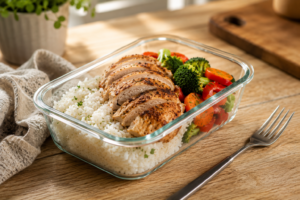
Learning how to meal prep on a budget isn’t about following a rigid, identical meal plan every single day — it’s about building a small, repeatable system: a few batch-cooked staples, a handful of interchangeable sauces, and one weekly planning session. Combined with the budget dinner ideas and essential kitchen tools already covered on this site, this plan gives you everything needed to cut both your grocery bill and your weekly takeout spending without a dramatic lifestyle change.

1 Comment