
Quick Answer
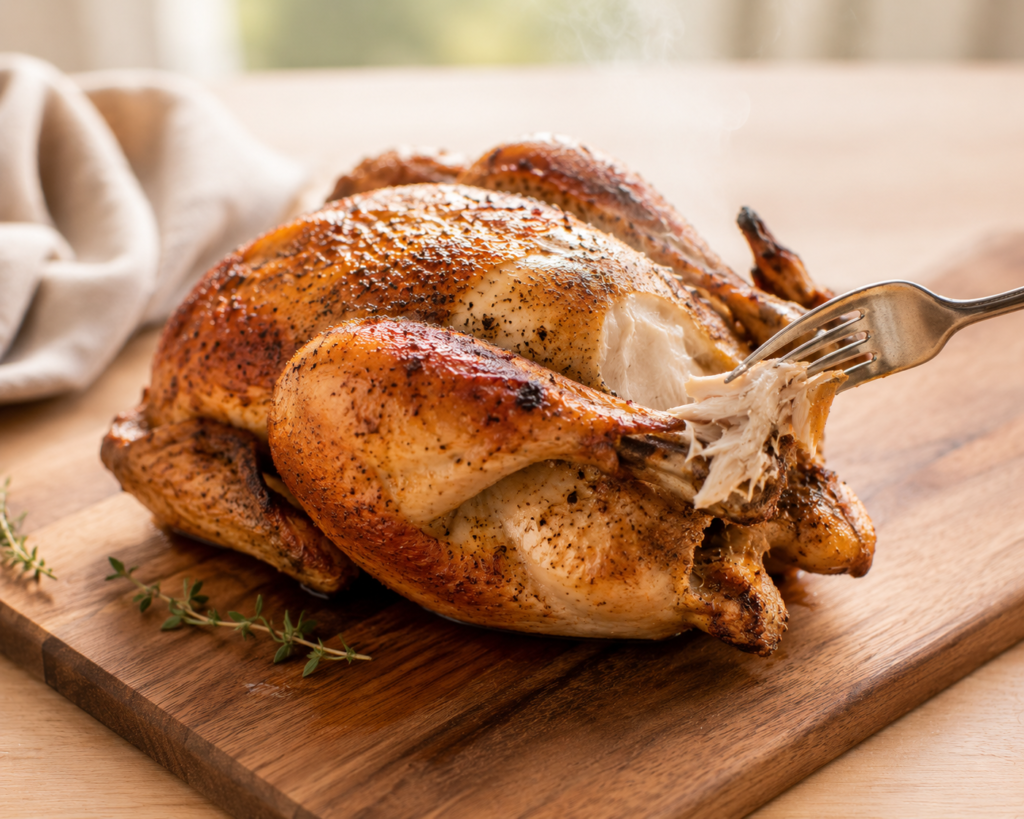
A grocery store rotisserie chicken is frequently cheaper per pound than buying and cooking the same weight of raw chicken yourself — a finding confirmed by multiple independent cost breakdowns, including one CBC investigation where a $7.99 Costco rotisserie chicken worked out cheaper per pound than raw chicken at the same store. The reason isn’t a manufacturing shortcut: many retailers treat rotisserie chicken as a “loss leader” (a product sold at a deliberate loss to bring shoppers in the door), with Costco alone reportedly losing $30–40 million a year on its rotisserie chicken program. Once you’ve picked one up, the 15 leftover rotisserie chicken recipes below turn that single $5–8 bird into several completely different dinners.
This connects directly to the chicken thigh recipes and budget grocery shopping guides already on this site — a rotisserie chicken is essentially a pre-cooked, pre-seasoned budget protein shortcut that fits the same weekly rotation.
Why Rotisserie Chicken Is Often Cheaper Than Raw Chicken
Three factors consistently explain the price gap, based on reporting from grocery industry analysts and direct cost comparisons:
- It’s frequently used as a loss leader. Stores intentionally price rotisserie chicken low to draw shoppers in, expecting them to fill the rest of their cart at regular prices — Costco’s rotisserie program is a widely cited example of this strategy.
- It repurposes birds nearing their sell-by date. Many stores move raw chickens close to expiration onto the rotisserie rather than marking them down or discarding them, recovering value that would otherwise be lost.
- Rotisserie chickens tend to run smaller. To keep cook times and spit sizes consistent, rotisserie birds are often on the smaller end, which keeps the sticker price low even though the price per pound may still compare favorably to raw chicken.
The practical takeaway: buying one is rarely a “convenience tax” the way most pre-made grocery items are — for chicken specifically, it’s often the more budget-rational choice, before even counting the time and energy saved not cooking it yourself.
15 Leftover Rotisserie Chicken Recipes
1. Chicken Tacos
Shredded chicken warmed with taco seasoning, served in tortillas — ready in under 10 minutes since the protein is already cooked.
2. Chicken Noodle Soup
Shredded chicken added to broth, noodles, and vegetables — one of the fastest homemade soups possible, since there’s no raw chicken cook time to wait through.
3. Chicken Salad
Shredded chicken mixed with mayo or Greek yogurt, celery, and seasoning — a classic no-cook lunch or light dinner.
4. Chicken Quesadillas
Shredded chicken and cheese folded into a tortilla and pan-crisped — one of the quickest recipes on this list.
5. Chicken and Rice Casserole
Shredded chicken layered with rice, sauce, and cheese, baked until bubbling — a filling, make-ahead-friendly dinner.
6. Chicken Pot Pie (Biscuit-Topped)
Shredded chicken, frozen mixed vegetables, and a simple sauce, topped with drop biscuits instead of pie dough for a faster version.
7. Chicken Burrito Bowls
Shredded chicken, rice, and black beans — pairs directly with the pantry staple recipes already on this site.
8. Chicken Alfredo Pasta
Shredded chicken tossed into pasta with a simple cream or jarred alfredo sauce — a restaurant-style dinner that comes together in the time it takes to boil pasta.
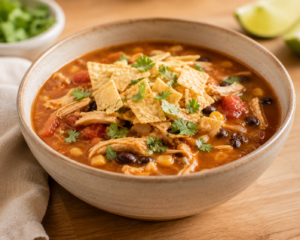
9. Chicken Tortilla Soup
Shredded chicken simmered with broth, canned tomatoes, and chili seasoning, topped with crushed tortilla chips.
10. Chicken Fried Rice
Shredded chicken stirred into day-old rice with vegetables and soy sauce — the same technique covered in the budget dinner ideas guide, using rotisserie chicken instead of raw.
11. Buffalo Chicken Dip
Shredded chicken mixed with hot sauce, cream cheese, and ranch, baked until warm — a filling snack or light dinner with vegetables or crackers.
12. Chicken and Dumplings
Shredded chicken in a creamy broth topped with simple drop dumplings — traditionally a long-simmer dish, dramatically faster starting from pre-cooked chicken.
13. Chicken Enchiladas
Shredded chicken rolled into tortillas with sauce and cheese, baked until bubbling — freezes well before baking, connecting to the make-ahead freezer meals guide.
14. Chicken Caesar Wraps
Shredded or sliced chicken, romaine, and Caesar dressing wrapped in a tortilla — a fast, mostly no-cook dinner.
15. Chicken and Vegetable Stir-Fry
Shredded chicken added at the end of a quick vegetable stir-fry with soy sauce — since the chicken is already cooked, it only needs to be warmed through.
Expert Tip
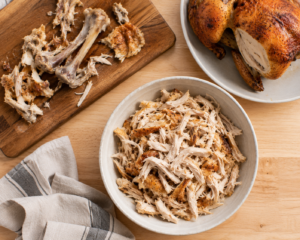
Break down a whole rotisserie chicken the day you buy it rather than storing it whole — separate the meat from the bones and skin, portion it into meal-sized amounts, and refrigerate or freeze immediately. This single habit meaningfully increases how many of the fifteen recipes above you can realistically make throughout the week, since pre-shredded chicken is ready to drop into any recipe without any extra prep later.
Common Rotisserie Chicken Mistakes to Avoid
- Leaving it whole in the fridge for days. A whole chicken carcass takes up space and makes portioning inconvenient; breaking it down immediately makes it far more useful.
- Forgetting to save the bones. Rotisserie chicken bones make a genuinely good homemade broth — simmer them with water and vegetable scraps for a few hours rather than discarding them.
- Not reheating to a safe temperature. According to official USDA guidance, leftovers — including pre-cooked rotisserie chicken — should be reheated to an internal temperature of 165°F, confirmed with a food thermometer, before eating.
- Keeping it too long before using it. Cooked chicken, including rotisserie chicken, is generally safe in the refrigerator for 3–4 days; freeze any portion you won’t use within that window.
- Assuming every store’s rotisserie chicken is priced the same way. Pricing strategy varies by retailer, so it’s worth comparing the per-pound cost against raw chicken at your specific regular store rather than assuming the discount always applies.
Frequently Asked Questions
Is rotisserie chicken really cheaper than cooking your own? Frequently, yes — multiple independent cost breakdowns, including a detailed CBC investigation and consumer cost analyses, have found rotisserie chicken priced lower per pound than raw chicken at the same store, largely due to loss-leader pricing strategies and stores repurposing chicken nearing its sell-by date.
How long does leftover rotisserie chicken stay safe to eat? Generally 3–4 days in the refrigerator, according to standard USDA food safety guidance for cooked poultry — freeze any portion you won’t use within that window.
What temperature should leftover rotisserie chicken be reheated to? 165°F, measured with a food thermometer, which is the official USDA-recommended safe reheating temperature for cooked poultry and other leftovers.
Can you freeze rotisserie chicken after buying it? Yes — shred or portion the meat first, then freeze in flat, labeled bags, following the same approach covered in the make-ahead freezer meals guide already on this site.
Why do some rotisserie chickens seem smaller than raw chickens at the same store? Rotisserie chickens are typically selected for uniform size to fit rotisserie equipment consistently, which often means they run slightly smaller than the average raw chicken in the same store’s meat case — this is a normal, expected difference rather than a sign of a lower-quality bird.
Final Thought
A rotisserie chicken is one of the rare grocery store shortcuts where convenience and cost savings actually line up, rather than trading one for the other. Paired with the chicken thigh, freezer meal, and pantry staple guides already on this site, these fifteen recipes turn a single five-to-eight-dollar chicken into most of a week’s worth of genuinely different dinners.

1 Comment