
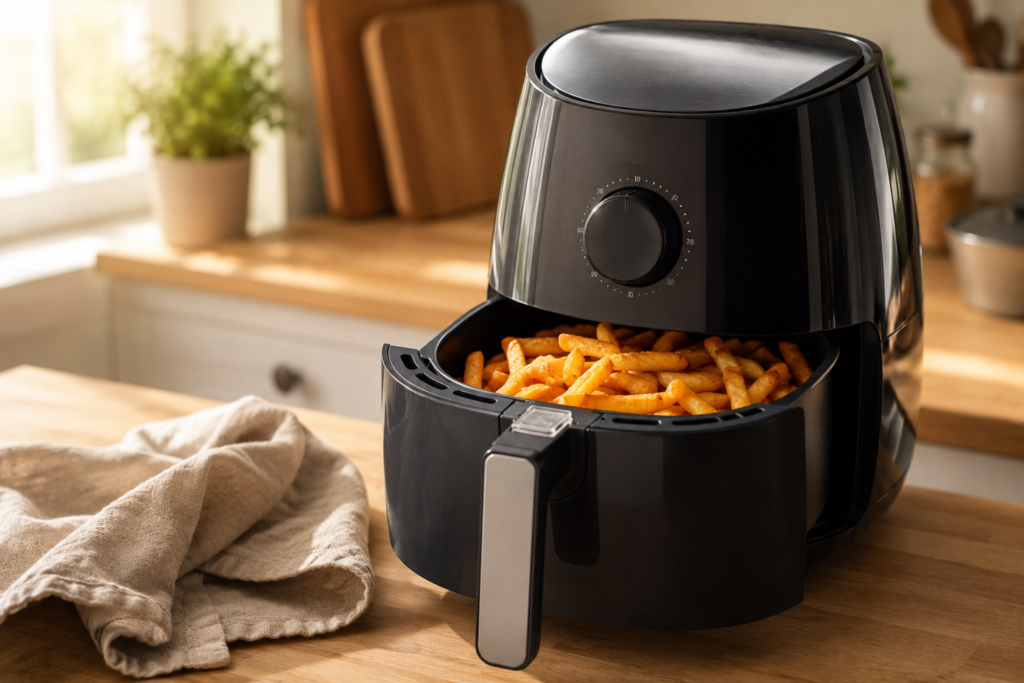
An air fryer is one of the few kitchen appliances that consistently lives up to the hype: it cooks faster than an oven, uses far less oil than deep frying, and cleans up in minutes. But walking into a store or browsing online as a first-time buyer is overwhelming — models range from $30 to $300, and most of that price difference has nothing to do with how well the food actually turns out. This air fryer for beginners guide covers exactly what to look for when buying one, how to use it safely from day one, and ten easy recipes to get comfortable with before branching out on your own.
If you’re already working through the meal prep on a budget plan, an air fryer fits directly into that system — it’s one of the fastest ways to reheat or finish batch-cooked proteins without drying them out the way a microwave does.
How an Air Fryer Actually Works
An air fryer is essentially a small, high-powered convection oven. A heating element combined with a fast-circulating fan cooks food quickly and crisps the exterior, similar to deep frying but using little to no added oil. This is why air-fried food browns and crisps in a way a regular oven often struggles to replicate at the same speed. For more on the science behind this cooking method, see this air fryer guide from South Dakota State University Extension.
What to Look for When Buying (The Only Specs That Matter)
1. Capacity
For a single person or couple, a 3–4 quart basket is enough. For a family of four or more, look for 5–6 quarts, or a dual-basket model so two foods can cook at different temperatures at once.
2. Basket Style vs. Oven Style
Basket-style air fryers are cheaper and take up less counter space, but oven-style versions (with a door instead of a pull-out basket) usually offer more capacity and can double as a toaster oven, which adds long-term value for the price.
3. Wattage
Look for at least 1,500 watts. Lower-wattage models cook noticeably slower and less evenly, which often leads beginners to think they did something wrong when the appliance is simply underpowered.
4. Non-Stick Basket Material
A basket coated in a durable, PFOA-free non-stick coating matters far more than smart features like Wi-Fi connectivity or app control, which add cost without meaningfully improving how food cooks.
5. What You Can Safely Skip Paying For
App connectivity, voice control, and multiple pre-set “recipe” buttons all add to the price without changing results — a simple dial or digital display with manual time and temperature control works exactly as well and is easier to repair or replace if something breaks.
How to Use an Air Fryer Safely (For First-Timers)
- Never line the basket with parchment paper without weighing it down — loose paper can be pulled into the heating element and pose a fire risk. Perforated, pre-cut air fryer liners are a safer option if you want easier cleanup.
- Don’t overcrowd the basket. Food needs space for air to circulate; overcrowding leads to soggy, unevenly cooked results, which is the most common beginner complaint.
- Shake or flip halfway through cooking for anything breaded or irregularly shaped, to ensure even crisping on all sides.
- Preheat for 3–5 minutes on recipes that call for it, especially with frozen foods, for the crispiest results.
- Clean the basket after every use — built-up oil residue is both a fire risk over time and the main cause of an air fryer developing a burnt smell during future use.
10 Easy Air Fryer Recipes to Start With
1. Frozen French Fries
The single easiest starter recipe. 400°F for 12–15 minutes, shaking the basket halfway, produces crispier results than a conventional oven in half the time.
2. Crispy Chicken Thighs
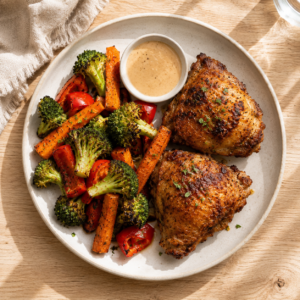
Season with salt, pepper, and paprika, cook skin-side up at 380°F for 20–22 minutes. No oil needed if the thighs have skin.
3. Roasted Vegetables
Toss chopped vegetables (broccoli, carrots, zucchini) in a small amount of oil and salt, cook at 375°F for 12–15 minutes, shaking once.
4. Reheated Pizza
400°F for 3–4 minutes restores a crispy crust far better than a microwave, which leaves pizza soggy.
5. Bacon
Lay strips flat, cook at 350°F for 8–10 minutes. Significantly less mess than stovetop frying, with no oil splatter to clean up.
6. Salmon Fillets
Season simply with lemon, salt, and pepper, cook at 380°F for 8–10 minutes depending on thickness — a fast, hands-off way to cook fish without heating up the kitchen.
7. Homemade Chicken Nuggets
Bread chicken pieces lightly, cook at 380°F for 10–12 minutes, flipping halfway — a healthier, oil-free version of a freezer staple.
8. Baked Potatoes
Pierce with a fork, cook at 400°F for 35–40 minutes depending on size — faster than a conventional oven and produces a crispier skin.
9. Reheating Batch-Cooked Chicken
For anyone following the meal prep on a budget plan, reheating pre-cooked chicken at 350°F for 5–6 minutes restores crispness that a microwave can’t replicate.
10. Roasted Chickpeas
Toss canned, drained chickpeas in oil and spices, cook at 400°F for 12–15 minutes, shaking occasionally, for a crunchy, high-protein snack.
Common Air Fryer Mistakes Beginners Make
- Using too much oil — an air fryer needs a fraction of the oil deep frying does; more than a light coating usually leads to smoking rather than better crisping.
- Skipping the shake/flip step — this single step is responsible for most of the difference between evenly crisped and unevenly cooked results.
- Not adjusting cook times from oven recipes — air fryers generally cook 20–25% faster than a conventional oven at the same temperature, so oven recipes need their time shortened, not just their temperature copied directly.
- Ignoring the manual/quick-start guide entirely — every model has slightly different basket depth and airflow, so the first one or two recipes are worth watching closely rather than assuming settings transfer exactly from a recipe blog. Avoiding these mistakes is the fastest way for an air fryer for beginners to start getting consistent, crispy results.
Frequently Asked Questions
Is an air fryer worth it for a beginner cook? Yes, particularly because it’s one of the most forgiving appliances to learn on — most mistakes (slightly over- or under-cooking) are easy to correct on the next attempt, and cleanup is simple compared to stovetop frying.
Do I need to buy a specific expensive brand for good results? No. Once wattage, capacity, and basket coating quality are similar, mid-range and budget air fryers from reputable brands perform very similarly to premium ones for standard home cooking.
Can an air fryer replace a regular oven? For most single-serving or small-batch cooking, yes. For large quantities (a full turkey, multiple trays of cookies), a conventional oven is still more practical due to size limits.
How long does a typical air fryer basket coating last? With regular hand-washing (avoiding abrasive scrubbers) and no metal utensils scraping the surface, a good non-stick basket typically lasts 2–3 years before any noticeable coating wear.
Is it safe to cook raw meat in an air fryer? Yes, as long as it reaches a safe internal temperature — using a basic meat thermometer (also covered in the budget kitchen tools guide) is the most reliable way to confirm doneness rather than relying on time alone.
Final Thought
For anyone just getting comfortable in the kitchen, an air fryer for beginners is one of the lowest-risk appliance purchases available — it’s forgiving, fast, and easy to clean, which makes it far more likely to actually get used regularly instead of becoming another unused kitchen gadget. Start with the ten recipes above, get comfortable with timing and shaking, and it becomes one of the fastest ways to turn the staples from the budget dinner ideas and meal prep guides into crispy, restaurant-style results at home.

1 Comment