
Quick Answer
Cottage cheese has quietly become one of the biggest food trends of the past three years, with U.S. sales climbing roughly 20% year-over-year and the #cottagecheese hashtag passing 108,000 posts on TikTok alone. The appeal comes down to numbers: a single cup can provide up to 26 grams of protein for well under a dollar, making it one of the cheapest high-protein foods available — and unlike most trending ingredients, it works in both sweet and savory dishes. These 15 cottage cheese recipes cover both directions, from blended pancakes to savory pasta sauce.
This connects directly to the high-protein meals on a budget guide already on this site — cottage cheese is arguably the single most budget-efficient protein source covered anywhere on this site, gram for gram.
Cottage Cheese vs. Other Common Proteins
| Food | Protein per Serving | Approx. Cost per Serving |
|---|---|---|
| Cottage cheese (1 cup) | Up to 26g | Under $1 |
| Greek yogurt (1 cup) | ~20g | $1–1.50 |
| Eggs (2 large) | ~12g | Under $0.50 |
| Canned tuna (3.5 oz) | ~20g | $0.75–1 |
| Chicken breast (3.5 oz) | ~24g | $1.50–2 |
Cottage cheese consistently delivers among the most protein per dollar of any widely available food, which is a major reason its popularity has held steady rather than fading as a short-lived trend.
8 Savory Cottage Cheese Recipes
1. Blended Cottage Cheese Pasta Sauce
Cottage cheese blended smooth with garlic and parmesan creates a creamy pasta sauce with far more protein than a traditional cream sauce — one of the most popular viral cottage cheese uses.
2. Whipped Cottage Cheese Toast
Blended until smooth and spread on toast in place of cream cheese, topped with everything bagel seasoning or sliced tomato.
3. Cottage Cheese Egg Scramble
Cottage cheese folded into scrambled eggs partway through cooking adds protein and a creamier texture without changing the flavor significantly.
4. High-Protein Mac and Cheese
Blended cottage cheese mixed into a standard cheese sauce boosts the protein content of a classic comfort dish substantially.
5. Cottage Cheese Dip
Blended with herbs, garlic, and a little lemon juice for a high-protein alternative to sour cream-based dips — serve with vegetables or crackers.
6. No-Noodle Cottage Cheese Lasagna
Layered with vegetables and sauce in place of some or all of the traditional ricotta, adding significant protein per serving.
7. Cottage Cheese Flatbread (Two Ingredients)
Blended cottage cheese mixed with self-rising flour forms a simple dough that bakes into a high-protein flatbread — no yeast or proofing required.
8. Savory Cottage Cheese Bowl
Cottage cheese topped with cucumber, tomato, olive oil, and everything bagel seasoning — a five-minute, no-cook high-protein meal.
7 Sweet Cottage Cheese Recipes
9. Blended Cottage Cheese Ice Cream
Cottage cheese blended smooth with frozen fruit and a little honey or maple syrup, then frozen — one of the most viral cottage cheese recipes on social media.
10. Cottage Cheese Pancakes
Blended into the batter along with eggs and flour, producing notably fluffier pancakes with significantly more protein than a standard recipe.
11. Cottage Cheese Overnight Oats
Blended cottage cheese stirred into oats instead of (or alongside) yogurt for an extra protein boost, prepared the night before.
12. Cottage Cheese Cheesecake
A lighter, higher-protein take on traditional cheesecake, using blended cottage cheese in place of some or all of the cream cheese.
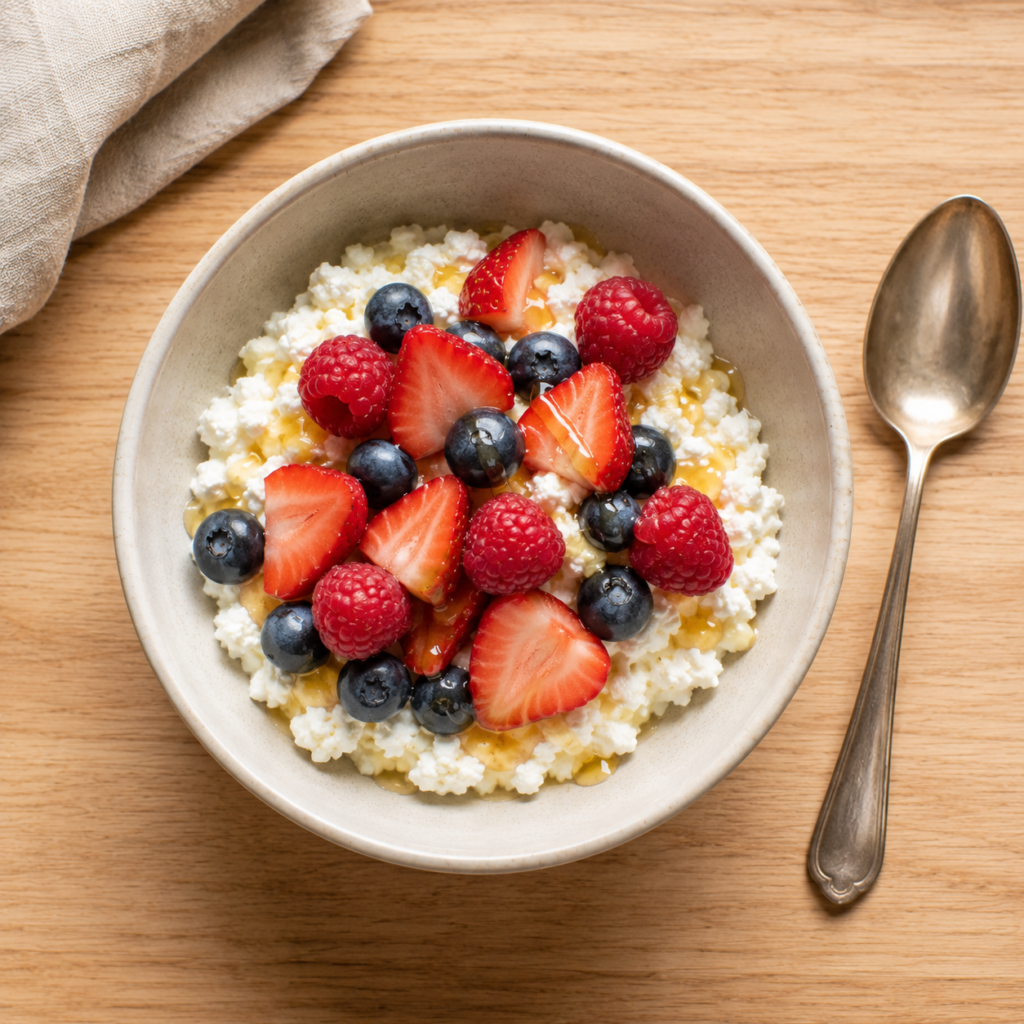
13. Cottage Cheese and Berry Bowl
Cottage cheese topped with fresh or frozen berries and a drizzle of honey — one of the simplest, most classic ways to eat it, requiring no preparation at all.
14. Cottage Cheese Chocolate Mousse
Blended smooth with cocoa powder and a sweetener, chilled until set — a genuinely high-protein dessert that doesn’t taste like a compromise.
15. Cottage Cheese Toast with Honey and Fruit
Whipped cottage cheese spread on toast, topped with sliced fruit and a drizzle of honey — a filling, protein-rich breakfast or snack.
Expert Tip
Blending cottage cheese until completely smooth (in a blender or food processor, roughly 30–60 seconds) is the single technique behind most of the viral recipes on this list — it eliminates the curdled texture some people dislike while keeping the full protein content intact, which is exactly why blended versions show up so often in both the sweet and savory recipes above.
Common Cottage Cheese Mistakes to Avoid
- Judging the whole ingredient by the plain, unblended texture. Many people who disliked cottage cheese years ago haven’t tried the blended versions responsible for its current popularity, which have a completely different, smooth texture.
- Buying flavored varieties by default. Plain cottage cheese is typically cheaper and more versatile for both sweet and savory recipes than pre-flavored versions, which often cost more for less flexibility.
- Storing it improperly. Cottage cheese is a perishable dairy product that should be kept refrigerated and consumed within about one week of opening for best quality and safety.
- Overlooking it as a dinner ingredient. As covered above, cottage cheese works in pasta sauces, egg dishes, and dips just as effectively as sweet applications, not just breakfast or snacks.
Frequently Asked Questions
How much protein does cottage cheese actually have? Up to 26 grams per cup for low-fat varieties, making it one of the highest-protein foods per calorie and per dollar widely available in grocery stores.
Why does cottage cheese work in both sweet and savory recipes? Its mild flavor and creamy texture (especially once blended smooth) make it adaptable in a way most protein-rich foods aren’t — it can take on sweet flavors like fruit and honey just as easily as savory ones like garlic and herbs.
Is cottage cheese cheaper than Greek yogurt? Generally yes, and it typically offers a higher protein-to-cost ratio, though exact pricing varies by brand and store, similar to the comparisons in the high-protein meals guide already on this site.
Do I need a blender to enjoy cottage cheese in recipes? No — recipes like the berry bowl or savory bowl use it straight from the container, though many of the more popular viral recipes (ice cream, pancakes, sauces) do call for blending it smooth first.
How long does cottage cheese last once opened? Generally about one week when kept properly refrigerated, similar to most fresh dairy products — check the package date and use your senses (smell, appearance) as an additional check before eating.
Final Thought
Cottage cheese’s popularity isn’t a passing fad propped up by marketing — the protein-per-dollar math genuinely holds up, and its usefulness across both sweet and savory recipes gives it more everyday versatility than most trending ingredients. Paired with the high-protein and high-fiber guides already on this site, these 15 recipes make it easy to keep a container in regular rotation rather than a one-time social media experiment.
