
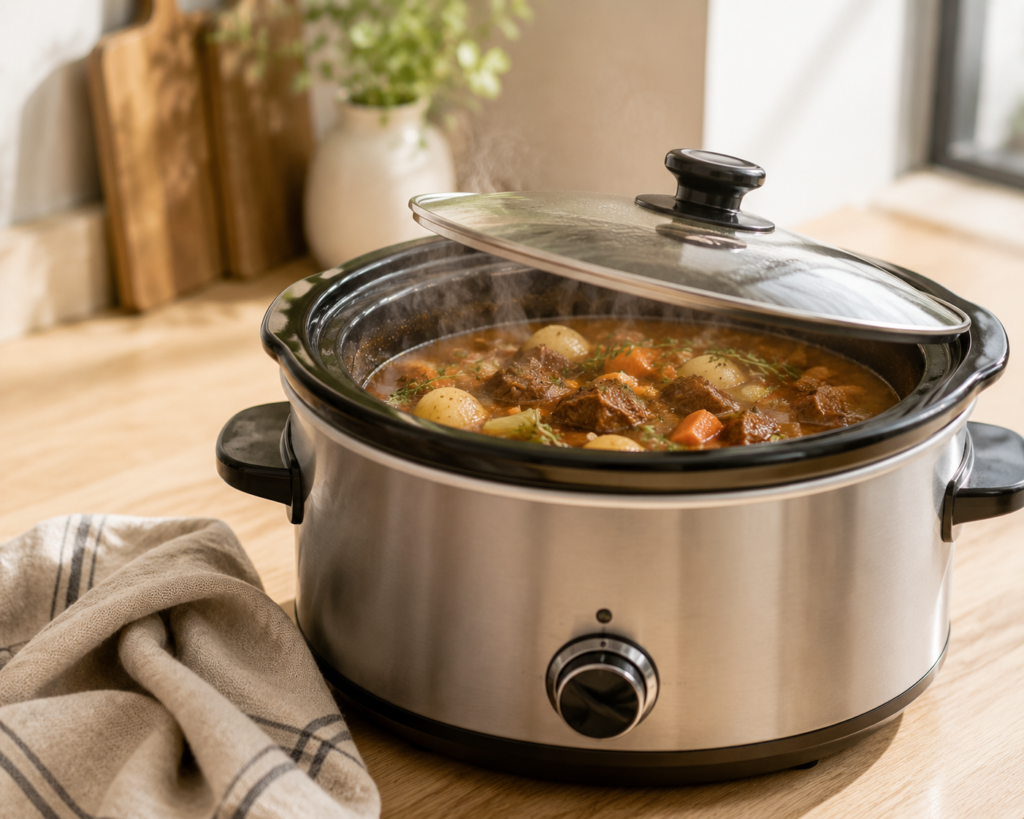
Of all the “set it and forget it” promises kitchen appliances make, the slow cooker is one of the few that genuinely delivers. Add ingredients in the morning, leave for work, and come home to a finished meal — no monitoring, no last-minute stovetop stress. This slow cooker recipes for beginners guide covers exactly what to look for when buying one, the food safety basics that matter most (based on official USDA guidance), and ten easy recipes to build confidence with before experimenting further.
This appliance pairs especially well with the batch-cooking approach from the meal prep on a budget guide — a slow cooker can turn a single bag of budget-friendly ingredients into an entire week of dinners with almost no active cooking time.
How a Slow Cooker Actually Works
A slow cooker uses a heating element surrounding a ceramic or stoneware insert to cook food gently over several hours, typically between 170°F and 280°F. This low, steady heat breaks down tougher, less expensive cuts of meat over time, which is exactly why slow cooker recipes so often call for budget cuts like chuck roast or chicken thighs rather than pricier tender cuts — the long cooking time does the tenderizing work that a fast, high-heat method can’t.
What to Look for When Buying
1. Size
A 4-quart slow cooker suits one to two people. A 6–7 quart model is better for families or for batch-cooking meals to freeze for the week ahead.
2. Programmable Timer with Auto-Shift to Warm
This feature automatically switches the cooker to a “keep warm” setting once cook time ends, which prevents overcooking if you’re not home right when the timer finishes — one of the most useful features for anyone using it during a work day.
3. Removable Insert
A ceramic insert that lifts out for easy washing (and can go from fridge to cooker) is far more convenient than a fixed, non-removable pot.
4. What You Can Skip Paying For
Wi-Fi connectivity and app control add cost without changing how food actually cooks — a reliable timer and a warm-setting switch matter far more than smart features for most home cooks.
USDA Food Safety Basics for Slow Cooking
These guidelines come directly from official USDA food safety guidance, and they matter more with a slow cooker than almost any other appliance, since food sits at a gentler heat for hours:
- Always thaw meat or poultry completely before adding it to the slow cooker. Frozen meat spends too long in the temperature “danger zone” (40°F–140°F) where bacteria multiply quickly.
- Keep perishable ingredients refrigerated until the moment you add them — don’t pre-load the insert the night before and let it sit at room temperature.
- Cut food into smaller, even pieces rather than cooking large roasts whole, unless your specific model’s manual confirms it’s rated for large cuts.
- Avoid lifting the lid unnecessarily. Every time the lid is removed, the internal temperature drops significantly and can take 20+ minutes to recover, which extends total cooking time and increases risk.
- Never use the “warm” setting to cook food from raw — it’s designed only to hold already-cooked food at a safe temperature, not to cook it.
- Use a meat thermometer to confirm poultry and meat have reached a safe internal temperature, rather than relying on time alone, especially the first few times you use a new recipe.
10 Easy Slow Cooker Recipes for Beginners
1. Classic Pulled Pork
Pork shoulder, a simple spice rub, and a splash of broth, cooked on low for 8 hours. Shreds easily with two forks and works in sandwiches, bowls, or tacos all week.
2. Chicken and Bean Chili
Chicken thighs, canned beans, canned tomatoes, and chili seasoning, cooked on low for 6–7 hours — one of the most forgiving recipes for a first attempt.
3. Beef Stew
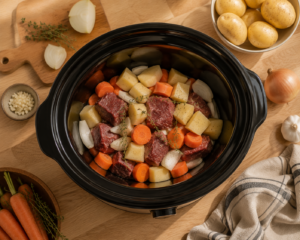
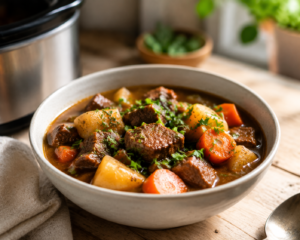
Chuck roast, potatoes, carrots, and broth, cooked on low for 8 hours. The long cook time is exactly what turns a tougher, cheaper cut into a tender, restaurant-style result.
4. Vegetable and Lentil Soup
Lentils, canned tomatoes, carrots, celery, and broth, cooked on low for 6 hours — a budget-friendly, high-protein vegetarian option that needs almost no prep.
5. Whole Chicken with Vegetables
A whole chicken (check your model’s manual for size limits) with root vegetables, cooked on low for 6–7 hours, produces incredibly tender meat that falls off the bone.
6. Honey Garlic Chicken Thighs
Chicken thighs in a simple honey, soy sauce, and garlic mixture, cooked on low for 5–6 hours — pairs directly with the rice and grain staples from the budget dinner ideas guide.
7. Black Bean Soup
Canned or dried (pre-soaked) black beans, onion, garlic, and cumin, cooked on low for 6–8 hours, blended partially at the end for a creamy texture without any added cream.
8. Turkey Meatballs in Marinara
Frozen or homemade turkey meatballs simmered in jarred or homemade marinara for 4–5 hours on low — an easy, mess-free alternative to stovetop simmering.
9. Oatmeal (Overnight)
Steel-cut oats, milk or water, and a bit of cinnamon, cooked on low overnight for a hot, ready breakfast — one of the simplest ways to start using a slow cooker beyond dinner.
10. Applesauce
Chopped apples, a splash of water, and cinnamon, cooked on low for 4–5 hours, then mashed — a simple, no-added-sugar dessert or snack that also demonstrates how the slow cooker handles fruit-based recipes.
Common Slow Cooker Mistakes Beginners Make
- Adding frozen meat directly from the freezer — this is the single most common food safety mistake beginners make with a slow cooker.
- Overfilling the insert — most manufacturers recommend filling it no more than two-thirds to three-quarters full for proper heat circulation.
- Constantly lifting the lid to check progress — this extends cooking time and lowers the internal temperature repeatedly.
- Using the “warm” setting instead of “low” to cook — warm is only for holding already-finished food, not cooking raw ingredients.
- Adding dairy or delicate vegetables too early — cream, milk, and quick-cooking vegetables like zucchini often break down or curdle over long cook times; add them in the last 30 minutes instead.
Frequently Asked Questions
Is it safe to leave a slow cooker running while I’m at work? Yes — this is exactly what a slow cooker is designed for. As long as meat is fully thawed before starting and the cooker has a working auto-shift-to-warm function, it’s considered safe to run unattended for a full workday, based on official USDA guidance.
Can I put frozen meat directly into a slow cooker? No. USDA guidance is clear that meat and poultry should always be thawed first, since frozen ingredients spend too long in the temperature danger zone before the slow cooker reaches a safe cooking temperature.
What’s the difference between cooking on low vs. high? Both settings reach the same final cooking temperature — low simply takes longer to get there and cooks over a longer total time, while high reaches temperature faster for a shorter overall cook time. Tougher cuts of meat generally benefit more from the low setting’s longer cooking time.
Do I need to add a lot of liquid to every recipe? Not as much as most people assume — slow cookers retain moisture extremely well since very little evaporates during cooking. Many beginner mistakes involve adding too much liquid, resulting in a thinner, more diluted result than intended.
How long does a slow cooker insert typically last? With proper care (avoiding sudden temperature changes, like adding cold liquid to a hot insert, which can crack ceramic), a quality slow cooker insert can last many years, often outlasting the base unit itself.
Final Thought
A slow cooker rewards patience rather than active effort, which makes it one of the most forgiving appliances for anyone just starting to cook more at home. Once the food safety basics above become second nature, these slow cooker recipes for beginners become a genuinely useful weekly tool — especially paired with the batch-cooking habits from the meal prep guide and the budget-focused shopping strategy from the grocery shopping guide already on this site.

1 Comment