
Quick Answer
Leftover rice is safe to eat and reuse, but it carries a genuine, well-documented food safety risk known as “fried rice syndrome” — food poisoning caused by Bacillus cereus, a bacterium that survives cooking as a heat-resistant spore. According to the FDA, roughly 63,400 cases of Bacillus cereus illness are reported in the U.S. each year. The key fact most people miss: reheating rice kills the bacteria itself, but not the toxin it may have already produced if the rice sat out too long before refrigeration — which is why proper cooling and storage matter more than reheating temperature alone. These 15 leftover rice recipes come with the exact steps to use rice safely, based on FDA and UK Food Standards Agency guidance.
This connects directly to several recipes already on this site — the egg dinner recipes and rotisserie chicken recipes guides both reference fried rice as a way to use up day-old rice, and this article covers exactly how to do that safely.
What Is “Fried Rice Syndrome,” Actually?
Bacillus cereus is a spore-forming bacterium naturally present in raw rice and soil. Cooking kills the active bacteria, but its spores can survive the cooking process. If cooked rice is then left at room temperature, those surviving spores can germinate and multiply, producing toxins. The critical detail: these toxins are heat-resistant, meaning reheating the rice afterward kills any remaining bacteria but does not destroy toxins that have already formed. This is why the timeline between cooking and refrigerating rice matters more than how thoroughly it’s reheated later.
Despite the informal nickname, this risk applies to fried rice specifically only because it’s a common way leftover rice gets reused — the same bacterium can affect any cooked rice, pasta, or starchy food left out too long, according to food safety researchers.
How to Store and Reheat Rice Safely
Based on official U.S. and UK food safety guidance:
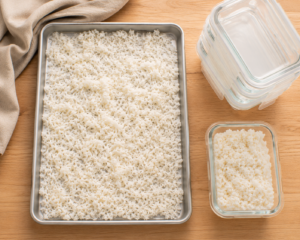
- Cool rice quickly. Spread it in a thin layer on a baking sheet or divide it into smaller, shallow containers rather than leaving a large pot to cool slowly.
- Refrigerate within 1–2 hours of cooking. The UK Food Standards Agency recommends chilling leftover rice within about an hour when possible; USDA-aligned guidance allows up to 2 hours at room temperature before refrigeration becomes necessary.
- Store in an airtight container in the refrigerator, and use within about 3–4 days.
- Reheat only once, and reheat it until steaming hot all the way through — official guidance recommends a minimum internal temperature of 165°F.
- Never leave rice to cool in the rice cooker or pot on the counter — this keeps it in the temperature danger zone (40°F–140°F) far longer than spreading it out to cool.
- When in doubt, throw it out. If rice has been left at room temperature for more than 2 hours, or refrigerated leftovers are older than 3–4 days, it’s not worth the risk.
15 Leftover Rice Recipes
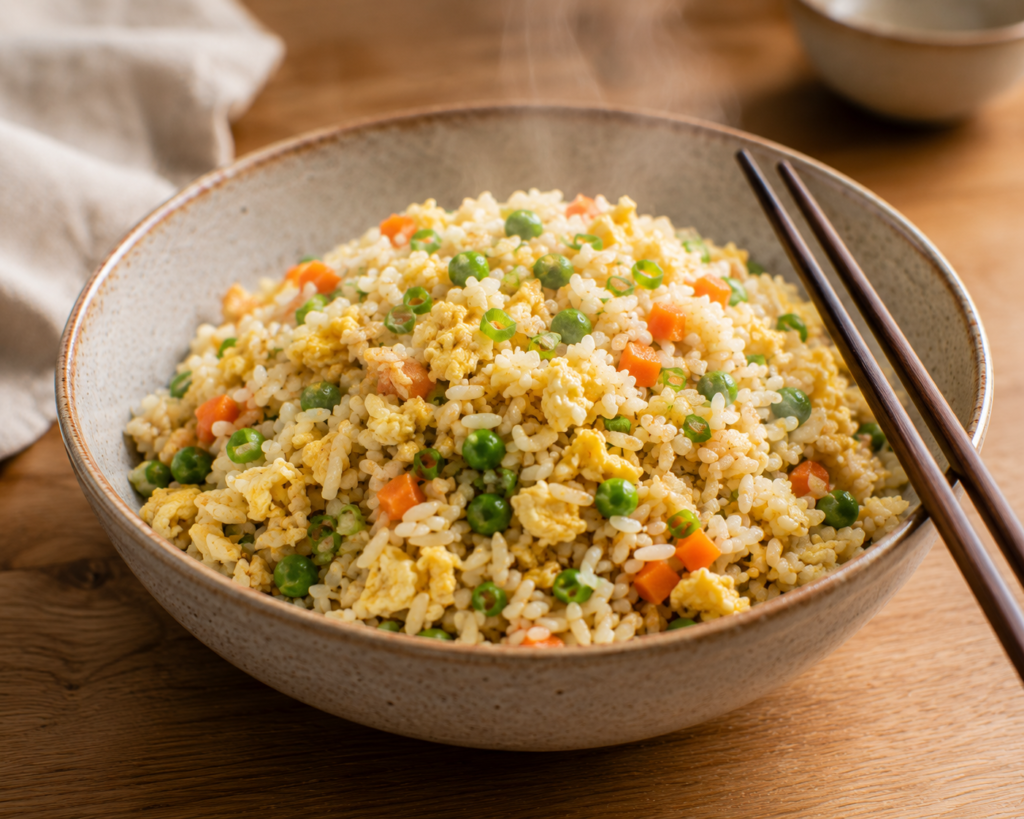
1. Classic Egg Fried Rice
Day-old rice stir-fried with scrambled egg, vegetables, and soy sauce — the dish most associated with using up leftover rice, and safe when the storage steps above are followed.
2. Rice and Bean Burrito Bowls
Leftover rice reheated and combined with canned beans and salsa — connects directly to the pantry staple recipes already on this site.
3. Chicken Fried Rice
Leftover rice combined with shredded rotisserie or cooked chicken, following the same approach in the rotisserie chicken recipes guide.
4. Rice Pudding
Leftover rice simmered with milk, sugar, and cinnamon — one of the few genuinely popular sweet uses for leftover rice.
5. Stuffed Peppers
Leftover rice mixed with ground beef or beans and stuffed into bell peppers before baking, using the technique from the ground beef recipes already covered here.
6. Rice Soup
Leftover rice added to broth with vegetables and shredded chicken — reheats the rice thoroughly as part of the cooking process, satisfying the safety guidance above naturally.
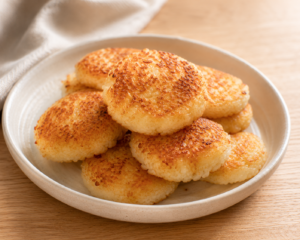
7. Crispy Rice Cakes
Leftover rice pressed into patties and pan-fried until crisp on both sides — a simple way to repurpose small amounts of rice.
8. Rice and Vegetable Stir-Fry
Leftover rice stir-fried with whatever vegetables are on hand and a simple soy-garlic sauce.
9. Burrito or Taco Filling
Leftover rice reheated and combined with seasoned ground beef or beans, wrapped in a tortilla.
10. Rice-Stuffed Tomatoes
Leftover rice mixed with herbs and cheese, stuffed into hollowed tomatoes, and baked until warmed through.
11. Congee (Rice Porridge)
Leftover rice simmered in extra broth or water until it breaks down into a soft, savory porridge — a traditional, low-waste way to use rice that’s gone slightly dry.
12. Rice-Stuffed Cabbage Rolls
Leftover rice combined with ground meat and seasoning, rolled in blanched cabbage leaves, and baked in sauce.
13. Rice Salad
Leftover rice cooled and tossed with vegetables, a vinaigrette, and canned beans or chickpeas — a cold dish where thorough reheating isn’t the safety mechanism, so the cooling and storage steps above matter even more.
14. Rice-Based Breakfast Bowl
Leftover rice reheated thoroughly and topped with a fried egg and hot sauce — pairs with the egg dinner recipes guide already on this site.
15. Arancini-Style Rice Balls
Leftover rice formed into balls with cheese in the center, breaded, and pan-fried or baked until crisp and heated through.
Expert Tip
If you regularly cook rice in batches for the week (as covered in the meal prep on a budget guide), portion it into meal-sized containers immediately after cooking, while spreading it thin to cool, rather than storing one large block. This single habit satisfies the “cool quickly” safety guidance automatically as part of a normal meal-prep routine, rather than requiring an extra step.
Common Leftover Rice Mistakes to Avoid
- Leaving rice in the pot to cool on the stove. This keeps a large mass of rice in the temperature danger zone far longer than spreading it out would.
- Reheating rice more than once. Official guidance specifically advises against reheating the same batch of rice multiple times, since each cycle adds more time in conditions that allow toxin formation.
- Assuming reheating “fixes” rice that sat out too long. As covered above, reheating kills bacteria but not heat-resistant toxins already produced — this is the single most misunderstood part of rice food safety.
- Keeping leftover rice too long “just in case.” Official guidance points to a 3–4 day refrigerated window; after that, the risk isn’t worth the small amount of food saved.
- Not reheating rice thoroughly in the center. Microwaves in particular can heat unevenly — stirring partway through reheating helps ensure the center reaches a safe temperature, not just the edges.
Frequently Asked Questions
Is it actually dangerous to eat leftover rice? Not if stored and reheated properly — the risk comes specifically from rice left at room temperature for too long before refrigeration, not from eating leftover rice in general.
How long can leftover rice sit out before it becomes unsafe? Generally no more than 2 hours at room temperature, based on standard food safety guidance; the UK Food Standards Agency recommends refrigerating within about 1 hour when possible for extra safety margin.
Can reheating rice in the microwave kill Bacillus cereus toxins? No — reheating kills the bacteria itself but does not destroy toxins that have already formed if the rice was left out too long before refrigeration, which is why proper cooling and storage timing matters more than reheating method.
How many times can leftover rice safely be reheated? Official guidance recommends reheating rice only once — repeatedly reheating and re-cooling the same batch increases the cumulative time it spends in unsafe temperature conditions.
Does this risk only apply to fried rice specifically? No — despite the popular nickname “fried rice syndrome,” Bacillus cereus can affect any cooked rice, pasta, or starchy food left at room temperature too long; fried rice is simply one of the most common ways leftover rice gets reused.
Final Thought
Leftover rice is one of the most useful, budget-friendly staples in a home kitchen — the fifteen recipes above stretch a single pot of rice into an entire week of different meals. The real key to using it safely isn’t complicated: cool it quickly, refrigerate it promptly, and reheat it thoroughly just once. Paired with the meal prep, pantry staple, and rotisserie chicken guides already on this site, leftover rice becomes one of the most reliable ingredients in a genuinely low-waste, budget-conscious kitchen.
