
Quick Answer
The average packed school lunch now costs $6.15 a day, according to Deloitte’s back-to-school cost analysis — notably more than the $2.99 average cost of a school cafeteria meal. These budget school lunch ideas are built to come in well under $3 a day by leaning on ingredients and batch-cooked staples already covered on this site, while following official USDA food safety rules for packed lunches, which many home-packed lunches actually violate without parents realizing it.
With back-to-school budgets up 11.7% in 2026 to an average of $489 per child according to industry survey data, the daily lunch line item is one of the few costs parents have direct, ongoing control over — unlike one-time school supply purchases.
The USDA’s Packed Lunch Safety Rules (Most Parents Miss These)
According to official USDA guidance, perishable food left between 40°F and 140°F for more than 2 hours is no longer considered safe to eat — and that 2-hour window shrinks to just 1 hour if the food has been sitting somewhere above 90°F, such as a hot car or a warm classroom. A basic lunch box or paper bag alone does not meet this standard for a typical school day, which often runs 4–6 hours between packing and eating.
The USDA’s specific recommendations:
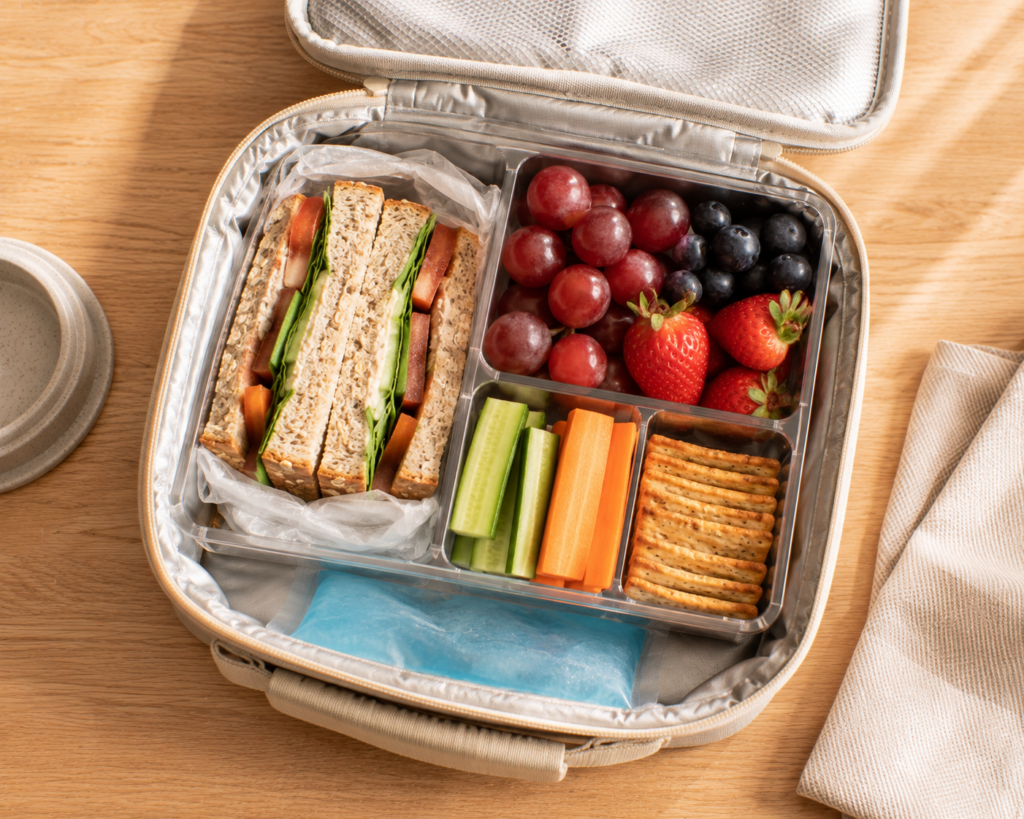
- Use an insulated lunch bag, not a paper bag or non-insulated box — a standard lunch box without insulation reaches room temperature within about 90 minutes.
- Pack at least two cold sources with any perishable food — two frozen gel packs, or one gel pack plus a frozen water bottle (which doubles as a cold drink by lunchtime).
- Pre-chill everything before packing. Cook the night before, refrigerate thoroughly, and pack cold food cold rather than letting it cool inside the lunch bag.
- For hot lunches (soup, chili), pre-heat the thermos itself with boiling water for a few minutes before adding hot food, and keep it closed until lunchtime to hold the temperature above 140°F.
- Skip mayonnaise, lettuce, and tomato in sandwiches that will sit for hours — these don’t hold up well and are better added just before eating if possible.
Naturally Non-Perishable Lunch Items (No Ice Pack Needed)
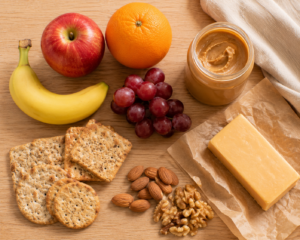
According to USDA guidance, these items don’t require refrigeration or ice packs, which makes building a lunch around them both safer and simpler:
- Whole, uncut fruits and vegetables
- Hard cheeses
- Canned meat or fish (like tuna pouches)
- Bread, crackers, chips
- Peanut butter and jelly
- Mustard, pickles, and other shelf-stable condiments
15 Budget School Lunch Ideas (Under $3 a Day)
1. PB&J with Whole Fruit
Still one of the cheapest, safest (no ice pack required) lunches possible — pairs a naturally shelf-stable sandwich with a piece of whole fruit.
2. Leftover Fried Rice in a Thermos
Using the technique from the leftover rice recipes guide, packed hot in a pre-heated thermos — a genuinely different lunch from the usual sandwich rotation.
3. Rotisserie Chicken and Cheese Wrap
Shredded chicken from the leftover rotisserie chicken guide, wrapped with cheese in a tortilla, packed with two ice sources.
4. Bean and Cheese Quesadilla
Made ahead using canned beans from the pantry staple recipes guide, reheated or eaten cold, cut into wedges.
5. Hard-Boiled Egg and Cracker Plate
Hard-boiled eggs (packed cold with an ice source), crackers, and a piece of cheese — an easy, high-protein lunch tying into the egg dinner recipes guide’s broader “eggs beyond breakfast” theme.
6. Leftover Chili in a Thermos
Using the ground beef recipes chili already covered on this site, reheated and packed hot — a filling, cold-weather lunch option.
7. Turkey and Cheese Roll-Ups
Sliced turkey and cheese rolled without bread, packed with two cold sources — a lower-carb, budget-friendly sandwich alternative.
8. Pasta Salad
Cold pasta tossed with vegetables and a simple vinaigrette — packs and travels well as long as it’s kept properly chilled.
9. Cottage Cheese and Fruit Cup
Using the cottage cheese recipes guide, packed with an ice source alongside fruit — a high-protein, no-prep option.
10. Leftover Meatballs with Marinara Dip
A handful of leftover meatballs packed with a small container of marinara for dipping, reheated if a microwave is available.
11. Homemade Lunchable-Style Plate
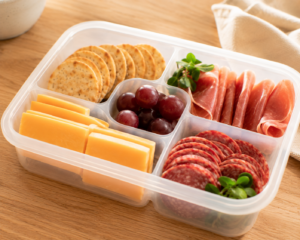
Crackers, sliced hard cheese, and canned meat or leftover meat, arranged in a divided container — a homemade, budget version of a pre-packaged lunch kit at a fraction of the cost.
12. Tuna Salad Sandwich
Canned tuna mixed with a little mayo, on bread — one of the most affordable protein-forward sandwiches, packed with an ice source since it contains mayo.
13. Rice and Bean Burrito
Using the same rice-and-bean combination from the pantry staple recipes guide, wrapped and packed cold or reheated.
14. Yogurt, Granola, and Berries
Layered in a container, packed with an ice source — a naturally sweet, no-cook option for lunch or a snack addition.
15. Leftover Egg Fried Rice
Using both the egg dinner recipes and leftover rice recipes guides together, packed hot in a thermos — a genuinely different, protein-rich lunch built entirely from ingredients already in regular rotation.
Expert Tip
Cooking slightly larger dinner portions specifically to become the next day’s lunch — rather than treating lunch packing as a separate task — is the single biggest time-and-money saver behind most of the ideas above. Nearly every recipe on this list traces back to a dinner already covered on this site, which means packing lunch becomes a five-minute portioning task rather than a second round of cooking.
Common Budget School Lunch Mistakes to Avoid
- Using a non-insulated lunch box for perishable food. As covered above, this shrinks the safe window to as little as 1–2 hours, which often doesn’t cover the gap between packing in the morning and eating at lunchtime.
- Packing only one cold source. USDA guidance specifically recommends two, since a single ice pack loses effectiveness faster than most parents expect.
- Buying pre-packaged “lunch kit” combos by default. These convenience products typically cost significantly more per lunch than assembling the same components (crackers, cheese, meat) separately at home.
- Packing food that’s still warm from cooking. Always cool leftovers in the refrigerator first — packing warm food directly into an insulated bag can push it into an unsafe temperature range faster.
- Forgetting that “eaten cold” foods still need cold sources. Even sandwiches and pasta salads that aren’t meant to be reheated still count as perishable if they contain meat, egg, or dairy.
Frequently Asked Questions
How much cheaper can a homemade lunch really be compared to buying lunch? Based on Deloitte’s $6.15 average packed lunch cost compared to a $2.99 average school cafeteria meal, and factoring in the batch-cooked, leftover-based ideas above, a genuinely budget-focused packed lunch can often come in under $3 a day — competitive with or cheaper than the cafeteria average.
How long is a packed lunch actually safe to eat? Up to 2 hours at room temperature without any cold source, or 1 hour if conditions are above 90°F, according to official USDA guidance — an insulated bag with two cold sources extends that safe window considerably longer, generally covering a full school day.
Can I freeze a sandwich to keep it cold until lunchtime? Yes, for most sandwich fillings — but USDA and extension guidance both note that mayonnaise, lettuce, and tomato don’t freeze and thaw well, so it’s better to add those fresh in the morning rather than freezing them in the sandwich.
Is it actually safe to send leftovers from dinner as the next day’s lunch? Yes, as long as the food was refrigerated properly the night before and is then packed with appropriate ice sources or reheated to a safe temperature if a microwave is available at school.
What’s the single easiest way to cut school lunch costs? Deliberately cooking extra at dinner specifically to become tomorrow’s lunch, as covered in the Expert Tip above — this eliminates the need for separate lunch-specific grocery shopping and cooking entirely.
Final Thought
With back-to-school costs climbing faster than overall inflation in 2026, the daily lunch box is one of the most controllable line items in a family’s budget — and it doesn’t require sacrificing food safety to get there. Paired with the pantry staples, leftover rice, and rotisserie chicken guides already on this site, these budget school lunch ideas turn dinner leftovers into a genuinely safe, affordable lunch rotation for the whole school year.
