
Quick Answer
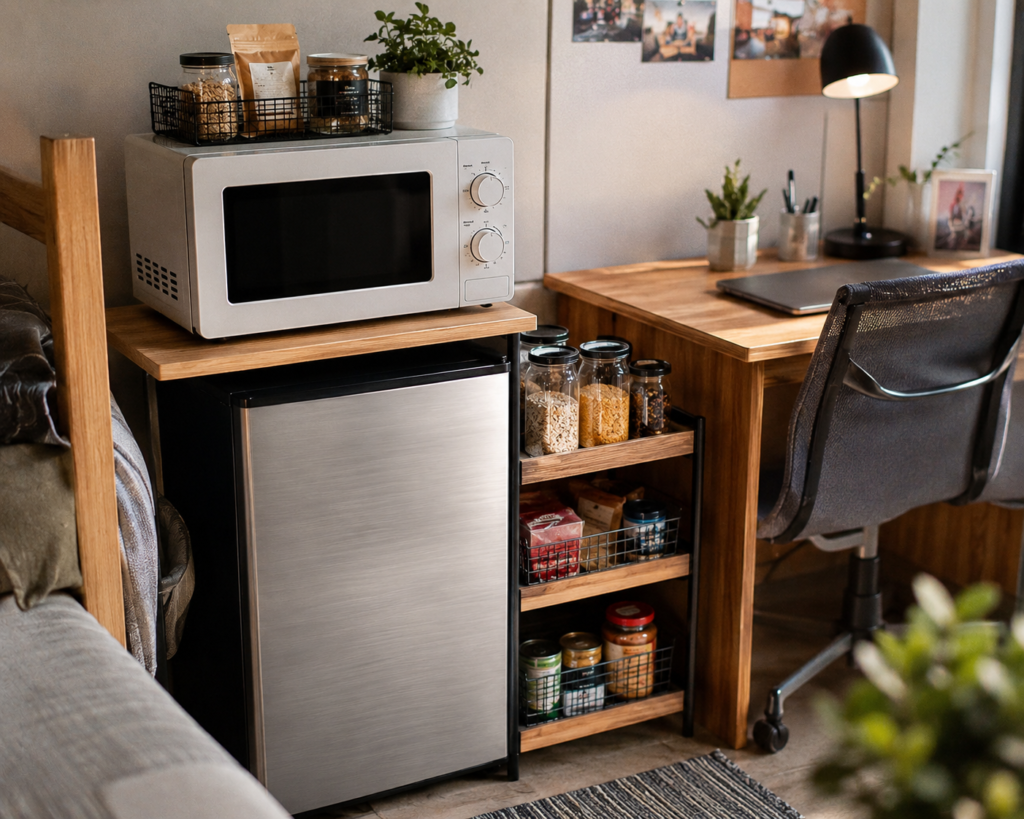
Before packing a single kitchen appliance for move-in, it’s worth knowing that dorm cooking rules vary dramatically by school — and the differences aren’t obvious. Some universities ban hot plates and toaster ovens but allow air fryers and rice cookers; others explicitly prohibit air fryers, Instant Pots, and rice cookers under the same “open heating coil” fire code that bans hot plates. Nearly every school allows a microwave and a small refrigerator, which is why the college dorm meals in this guide are built specifically around those two universally-permitted appliances, so they work regardless of which specific rules your dorm follows.
If you’ve already looked at the air fryer or slow cooker guides on this site, check your specific school’s housing handbook before packing either one — as the research below shows, this is far from a safe assumption either way.
Dorm Appliance Rules: Why You Can’t Assume Anything
A review of current housing policies across several universities shows genuinely inconsistent rules:
- Almost universally allowed: Microwaves (provided or personal, depending on the school) and mini-fridges under a certain size (commonly 4.5 cubic feet or less).
- Frequently banned: Hot plates, toaster ovens, and any appliance with an “open heating coil” or exposed element.
- Inconsistent — check your specific school: Air fryers, Instant Pots/pressure cookers, rice cookers, and electric kettles are allowed at some schools and explicitly banned at others, often under the same fire code language used to ban hot plates.
- Usually allowed with conditions: Electric kettles and drip coffee makers, typically only if they have an automatic shutoff and no exposed heating element.
The practical takeaway: check your specific school’s residence life or housing handbook before buying anything beyond a microwave and mini-fridge, since assuming a commonly-allowed appliance (like an air fryer) is safe everywhere is one of the most common move-in mistakes.
Food Safety in a Shared Dorm Fridge
A few extra precautions matter in a shared or small dorm fridge that don’t always apply at home:
- Keep raw and ready-to-eat food separated, especially in a shared common-area fridge where space and organization are inconsistent.
- Label food with your name and date, both to avoid mix-ups in shared spaces and to track how long something’s actually been stored.
- Check that the fridge is actually cold enough. Small dorm fridges can run warmer than a full-size refrigerator; a simple fridge thermometer (a few dollars) confirms it’s staying at or below 40°F.
- Don’t overpack a mini-fridge. Airflow matters even more in a small unit — an overstuffed mini-fridge can develop warm spots that spoil food faster than expected.
- For more on safe refrigerator temperatures, see official USDA refrigeration guidance.
15 College Dorm Meals (Microwave & No-Cook Only)
1. Mug Scrambled Eggs
Eggs whisked with a splash of milk in a microwave-safe mug, cooked in 60–90 second bursts, stirring between — connects to the “eggs beyond breakfast” approach in the egg dinner recipes guide.
2. Microwave Mac and Cheese (From Scratch)
Pasta cooked directly in a mug or bowl with water, then mixed with shredded cheese — genuinely better than the just-add-water packet version for a similar amount of effort.
3. Instant Ramen Upgrade
Instant ramen with frozen vegetables and a soft-boiled or scrambled egg stirred in — a five-minute way to turn a $0.30 meal into something far more filling and nutritious.
4. Microwave Baked Potato
A pierced potato microwaved for 5–8 minutes, topped with cheese, canned beans, or leftover toppings — one of the most filling, cheapest dorm meals available.
5. Tuna and Cracker Plate
Canned tuna, a squeeze of mustard or mayo packet, and crackers — a genuinely no-cook, protein-rich option using the same pantry logic from the pantry staple recipes guide.
6. Microwave Rice and Beans
Instant or pre-cooked microwavable rice combined with canned beans and salsa — ready in under 3 minutes.
7. PB&J Wrap
Peanut butter and jelly rolled in a tortilla instead of bread — no refrigeration needed, no cooking required.
8. Cottage Cheese and Fruit Cup
Using the cottage cheese recipes guide already on this site, a completely no-cook, high-protein option straight from the mini-fridge.
9. Microwave Quesadilla
A tortilla folded with cheese and microwaved for 30–45 seconds until melted — one of the fastest hot meals possible with just a microwave.
10. Overnight Oats
Oats, milk, and a spoonful of peanut butter or fruit, mixed in a jar and left in the mini-fridge overnight — completely no-cook, ready the next morning.
11. Microwave Nachos
Tortilla chips layered with canned beans and cheese, microwaved until melted, topped with salsa.
12. Egg Salad Sandwich
Hard-boiled eggs (boiled ahead of time in a communal kitchen if available, or bought pre-boiled) mashed with mayo, on bread — a no-microwave-needed option.
13. Microwave Fried Rice
Pre-cooked microwavable rice combined with frozen mixed vegetables, soy sauce, and a scrambled egg, microwaved in stages — a dorm-adapted version of the technique in the leftover rice recipes guide.
14. Yogurt Parfait
Yogurt layered with granola and fruit in a cup — completely no-cook, high-protein, and quick to assemble between classes.
15. Microwave Chili
Canned beans, canned tomatoes, and chili seasoning combined in a microwave-safe bowl, heated in stages and stirred — a genuinely filling, cheap dinner using only a microwave.
Expert Tip
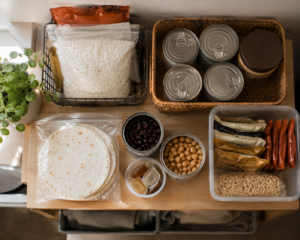
Stocking a small selection of shelf-stable staples at the start of the semester — the same core pantry items covered in the pantry staple recipes guide — means never being stuck with only vending machine or delivery options during a busy or broke week. A few cans of beans, tuna, microwavable rice, and peanut butter cost very little, don’t need refrigeration, and cover several of the recipes above without any grocery trip required.
Common Dorm Cooking Mistakes to Avoid
- Buying a banned appliance before checking the housing handbook. As covered above, this is a genuinely common and avoidable mistake — rules vary enough between schools that no appliance should be assumed safe without checking first.
- Overfilling a mini-fridge. This reduces airflow and can lead to spoilage faster than expected in a small space.
- Storing food in a shared fridge without labeling it. In communal spaces, unlabeled food is far more likely to go missing or get mixed up.
- Relying entirely on the packaged ramen/instant noodle diet. As shown above, small additions (an egg, frozen vegetables, canned beans) meaningfully improve both nutrition and how filling a meal actually is, for very little extra cost or effort.
- Not checking if a microwave-safe container is actually microwave-safe. Some plastic containers aren’t rated for microwave use and can warp or leach chemicals when heated — check for a microwave-safe label before use.
Frequently Asked Questions
Are air fryers actually allowed in most dorms? It varies significantly by school — some explicitly allow them, while others ban them under the same fire code rules used for hot plates, due to their heating element. Always check your specific school’s housing policy rather than assuming either way.
What appliances are safest to assume will be allowed everywhere? A microwave and a mini-fridge under the common size limit (often 4.5 cubic feet) are close to universally permitted, which is why this guide is built specifically around those two.
Is it safe to cook raw meat and eggs using only a microwave? Yes, as long as it reaches a safe internal temperature — eggs should reach 160°F and poultry 165°F, the same standards covered in the egg dinner recipes and chicken thigh recipes guides, though microwaves can heat unevenly, so stirring or checking multiple spots matters more than with conventional cooking.
How can I keep food safe in a small, potentially overworked mini-fridge? Avoid overpacking it, check that it’s actually running at or below 40°F with a simple thermometer, and don’t rely on a mini-fridge to properly chill something that was left out for hours beforehand.
What’s the single most useful non-appliance item for dorm cooking? A set of microwave-safe containers with lids — they double as cooking vessels and storage, which matters more in a small dorm room than almost any single appliance.

Final Thought
The biggest dorm cooking mistake isn’t a bad recipe — it’s assuming appliance rules are the same everywhere and finding out otherwise after move-in. Building a routine around what’s almost universally allowed (a microwave and a mini-fridge), backed by the pantry staples and egg approaches already covered on this site, means genuinely eating well through the semester regardless of which specific appliances your particular dorm does or doesn’t allow.
