
Quick Answer
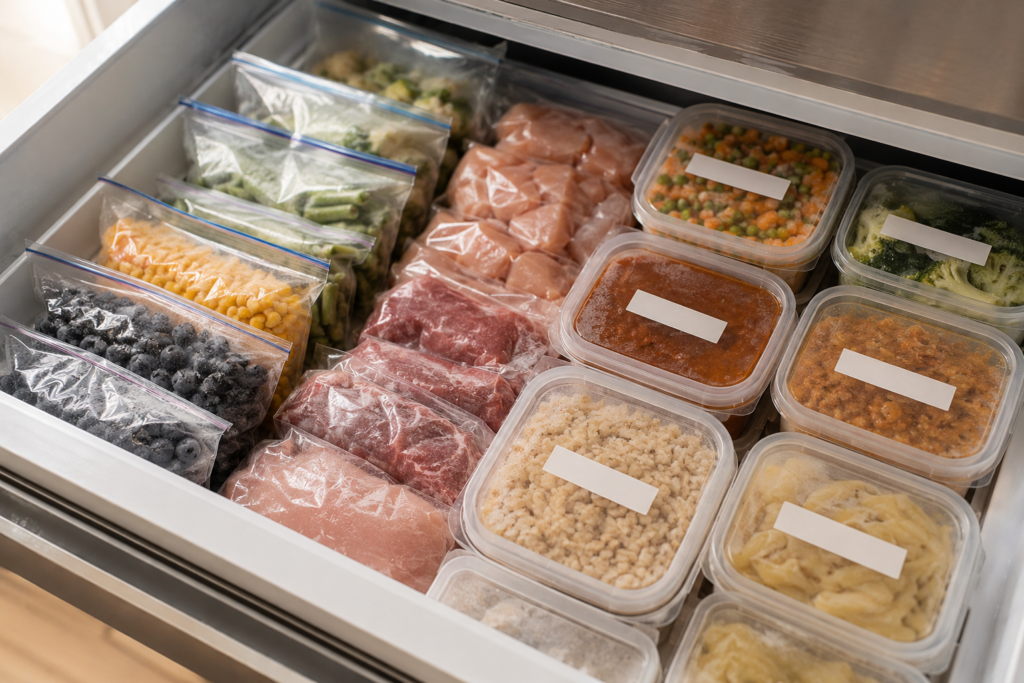
A well-stocked freezer is one of the single biggest levers for cutting a grocery bill, but most freezer staple lists stop at “freeze it” without saying how long it actually stays good. Based on official USDA guidance, most freezer staples remain safe indefinitely at 0°F or below — the real number that matters is the best-quality window before texture and flavor start to decline, which varies significantly by food type. These 20 freezer staples are chosen specifically because they anchor the recipes already covered on this site, from ground beef to leftover rice.
The 20 Freezer Staples (With Best-Quality Storage Times)
| Staple | Best-Quality Window | Used In |
|---|---|---|
| Ground beef | 3–4 months | Ground beef recipes |
| Chicken thighs (raw) | 9 months | Chicken thigh recipes |
| Shredded rotisserie chicken (cooked) | 2–3 months | Rotisserie chicken recipes |
| Bacon | 1 month | Breakfast-for-dinner skillets |
| Sausage | 1–2 months | Slow cooker soups |
| Frozen mixed vegetables | 8 months | Stir-fries, fried rice |
| Frozen berries | 8–12 months | Cottage cheese recipes, oats |
| Cooked rice | 6 months | Leftover rice recipes |
| Bread and tortillas | 3 months | Quesadillas, wraps, sandwiches |
| Shredded cheese | 6 months | Quick dinners, egg dishes |
| Butter | 6–9 months | Baking, cooking base |
| Eggs (out of shell, beaten) | 12 months | Egg dinner recipes |
| Broth/stock | 2–3 months | Soups, slow cooker recipes |
| Cooked beans | 6 months | Pantry staple recipes |
| Onions and peppers (chopped) | 10–12 months | Base for most savory dishes |
| Garlic (minced) | 1 month | Base for most savory dishes |
| Meatballs (cooked) | 2–3 months | Freezer meal guide |
| Soup and chili (cooked) | 2–3 months | Make-ahead freezer meals |
| Pancakes/waffles (cooked) | 1–2 months | Quick breakfasts |
| Cabbage (raw, for soups) | 10–12 months | Cabbage recipes |
These are quality windows, not hard safety cutoffs — food kept frozen continuously at 0°F remains safe to eat well beyond these times, it simply may lose some texture and flavor, consistent with the general freezing principles in the make-ahead freezer meals guide already on this site.
How to Build This List Without Overspending
- Buy in stages, not all at once. Trying to stock all 20 items in a single trip defeats the budget purpose — instead, add 2–3 items per shopping trip whenever they’re on sale.
- Prioritize proteins first. Ground beef, chicken thighs, and bacon typically offer the biggest per-pound savings when bought in bulk and portioned immediately, which connects directly to the bulk-buying principles in the Costco grocery guide already on this site.
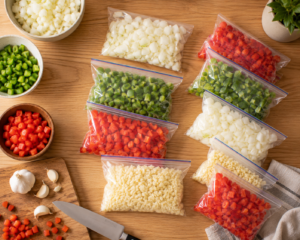
- Batch-cook aromatics once. Chopping a large batch of onion, pepper, and garlic in one session and freezing it in small portions saves prep time across dozens of future meals, not just one.
- Don’t skip the labels. Every item should be labeled with the date frozen — this is the only reliable way to track the quality windows in the table above, especially once several items start to look the same once frozen.
Expert Tip
The single most underused item on this list is frozen aromatics — chopped onion, garlic, and pepper. Most home cooks buy these fresh every single week, when a single large chopping session, frozen in ice-cube-tray-sized portions, can cover a month or more of cooking. This alone removes one of the most common reasons people skip cooking on a busy night: not wanting to chop vegetables from scratch.
Common Freezer Staple Mistakes to Avoid
- Freezing in bulk without portioning first. A single giant block of ground beef or soup is far less useful than several meal-sized portions — always portion before freezing, not after thawing.
- Forgetting what’s actually in there. Without labels and a rough inventory, freezer staples quietly expire in usefulness even while technically still safe, defeating the budget purpose entirely.
- Buying staples you won’t actually use. A freezer full of ingredients for recipes you never make is wasted money just as much as spoiled fresh food — build this list around meals from this site (or elsewhere) you’ll genuinely cook.
- Overfilling the freezer. Airflow matters for consistent freezing; an overstuffed freezer can develop warm spots that shorten the quality windows in the table above.
Frequently Asked Questions
Does frozen food ever actually become unsafe to eat? Not from time alone — according to USDA guidance, food kept continuously frozen at 0°F or below remains safe indefinitely. The quality windows above reflect when taste and texture start to decline, not a safety cutoff.
What’s the single most cost-effective freezer staple to start with? Ground beef and chicken thighs typically offer the clearest per-pound bulk-buying savings, and both anchor several recipes already covered on this site.
Can I freeze cooked rice from a restaurant or takeout, not just homemade? Yes — the same principles apply regardless of where the rice was cooked, as covered in the leftover rice recipes guide, including cooling it properly before freezing.
How many of these 20 items do I actually need to start? There’s no requirement to stock all 20 at once — starting with 5–6 staples that match recipes you already cook regularly is more practical than trying to build the full list in one trip.
Is a small freezer compartment enough, or do I need a standalone freezer? A small freezer compartment can realistically hold 8–10 of the staples above in modest quantities; a standalone freezer simply allows for larger bulk-buying, not a fundamentally different strategy.
Final Thought
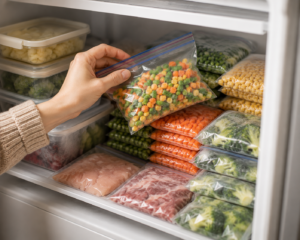
A freezer stocked with these 20 staples isn’t about hoarding food — it’s about never being more than 20 minutes from a real, home-cooked meal built from ingredients already covered across this site. Combined with the meal prep and make-ahead freezer meals guides, this list is the foundation nearly every other recipe on DailyLifeTips draws from.

2 Comments